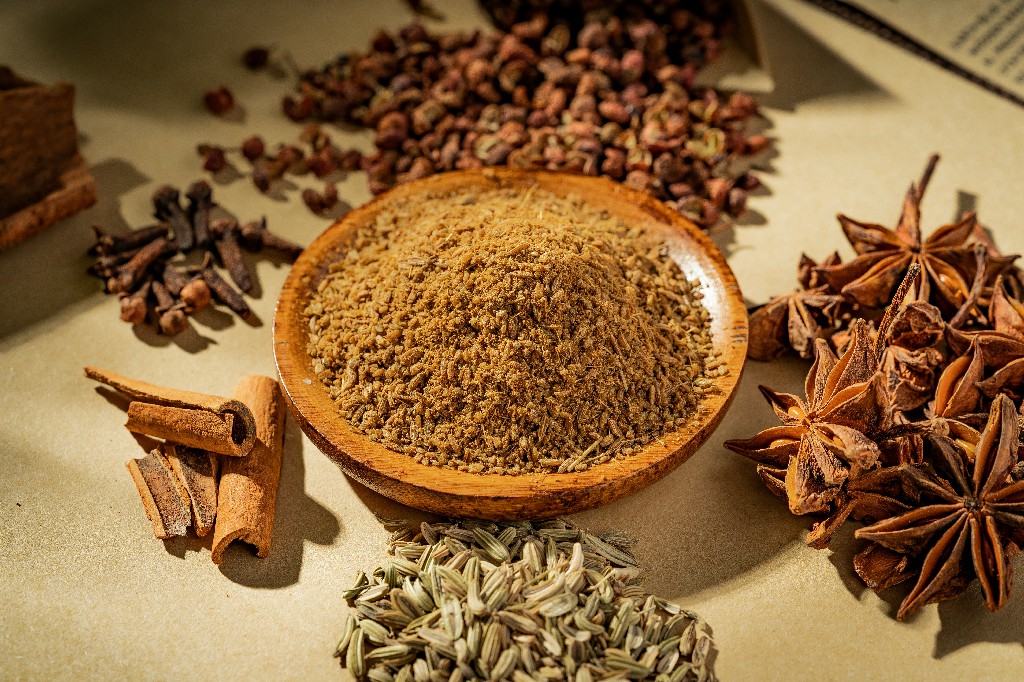
Historical Background of Five Chinese Powder

“Five Chinese Powder originates from ancient Chinese culinary tradition and philosophy.”

Five Chinese Powder, also known as Chinese Five-Spice Powder, has been used for centuries in traditional Chinese cuisine. The blend is inspired by the Chinese philosophy of balance, which emphasizes harmony between flavors and natural elements.

Historically, this spice blend was used to enhance the flavor, aroma, and depth of a wide range of dishes, especially those requiring warm and aromatic seasoning.


Definition of Five Chinese Powder

“Five Chinese Powder is a traditional Chinese spice blend designed to balance sweet, savory, and aromatic flavors.”

Five Chinese Powder is a dry seasoning blend made from five core spices. It is known for its bold, warm, and slightly sweet profile and is typically used in small amounts due to its strong aroma.


Common Ingredients in Five Chinese Powder

“A classic Five Chinese Powder blend combines warm and aromatic spices.”

Traditional Five Chinese Powder usually includes:

  • Star anise
  • Cinnamon or cassia
  • Cloves
  • Sichuan peppercorn
  • Fennel seeds

These spices create a distinctive flavor that is sweet, licorice-like, slightly spicy, and deeply aromatic.


Flavor Profile of Five Chinese Powder

“Five Chinese Powder delivers a bold, warm, and complex flavor in a single blend.”

The dominant notes come from star anise and cinnamon, balanced by the gentle tingling sensation of Sichuan peppercorn and the mild sweetness of fennel, creating a well-rounded seasoning.


Benefits of Five Chinese Powder

“Five Chinese Powder enhances flavor naturally while adding depth and aroma.”

Enhances Rich and Savory Dishes

Adds complexity and balance to a wide variety of recipes.

Strong Aroma with Small Usage

Only a small amount is needed to achieve a distinctive flavor.

Clean-Label Friendly

Made from natural spices without artificial additives.

Versatile for Global Cuisine

Suitable for traditional Chinese and modern Asian-inspired dishes.


Uses of Five Chinese Powder

“Five Chinese Powder is commonly used in dishes that require bold and aromatic seasoning.”

Common applications include:

  • Roasted and braised dishes
  • Marinades and dry rubs
  • Stir-fried meats and vegetables
  • Noodle and rice dishes
  • Asian-style seasoning blends

Five Chinese Powder in the Modern Food Industry

“Five Chinese Powder is widely applied in modern food manufacturing and culinary innovation.”

Today, Five Chinese Powder is used in processed foods, ready-to-cook meals, sauces, and seasoning blends. Its strong aroma and distinctive taste make it ideal for consistent flavor delivery in commercial applications.


Conclusion

“Five Chinese Powder represents balance, tradition, and bold aroma in Chinese cuisine.”

With its rich heritage, unique flavor profile, and versatile applications, Five Chinese Powder continues to be a key seasoning in both traditional and modern cooking around the world.

Historical Background of Cajun Seasoning

“Cajun seasoning originates from Louisiana, shaped by the rustic cooking traditions of the Cajun people.”

Cajun seasoning comes from the Cajun culture of Louisiana, USA, descended from French Acadian settlers. Living in rural environments, Cajun communities relied on simple ingredients and bold spices to create flavorful meals from locally available food.

This practical and robust style of cooking gave birth to Cajun seasoning—a spice blend designed to add strong flavor, heat, and depth to everyday dishes.


Definition of Cajun Seasoning

“Cajun seasoning is a bold and spicy blend of herbs and spices traditionally used in Cajun and Southern cuisine.”

Cajun seasoning is a dry spice blend known for its smoky, savory, and mildly spicy profile. It is designed to enhance food with strong character, making it one of the most recognizable seasoning blends in American cuisine.


Common Ingredients in Cajun Seasoning

“A classic Cajun seasoning combines spices that deliver heat, smokiness, and savory depth.”

Typical Cajun seasoning ingredients include:

  • Paprika
  • Garlic powder
  • Onion powder
  • Black pepper
  • White pepper
  • Cayenne pepper
  • Oregano
  • Thyme

These ingredients work together to create a balanced blend of heat, aroma, and rich flavor.


Benefits of Cajun Seasoning

“Cajun seasoning enhances bold flavor naturally while adding versatility to many dishes.”

Enhances Strong and Savory Flavor

Cajun seasoning delivers intense taste without the need for artificial flavor enhancers.

Adds Controlled Heat

The blend provides a balanced spiciness that enhances food without overpowering it.

Reduces the Need for Extra Seasoning

With multiple spices in one blend, Cajun seasoning simplifies cooking and reduces the need for multiple ingredients.

Suitable for Clean-Label Products

Made from natural spices, Cajun seasoning fits well into clean-label and natural food formulations.


Uses of Cajun Seasoning

“Cajun seasoning is widely used to season meats, seafood, and comfort foods.”

Cajun seasoning is commonly applied to:

  • Grilled or fried chicken
  • Seafood such as shrimp and fish
  • Rice dishes and jambalaya
  • Roasted vegetables
  • Marinades, rubs, and seasoning blends

Its versatility makes it popular in both home cooking and foodservice applications.


Cajun Seasoning in the Modern Food Industry

“Cajun seasoning has become a globally recognized flavor profile in modern food production.”

Today, Cajun seasoning is widely used in processed foods, ready-to-cook meals, snacks, and horeca products. Its bold and distinctive taste makes it ideal for global markets seeking strong and memorable flavors.

Available in various formulations, Cajun seasoning supports consistent quality and taste in large-scale food manufacturing.


Conclusion

“Cajun seasoning represents bold flavor, cultural heritage, and culinary creativity.”

Rooted in tradition and embraced worldwide, Cajun seasoning continues to bring heat, depth, and character to modern cuisine, making it an essential spice blend in both traditional and contemporary cooking.

Historical Background of Italian Herbs

“Italian herbs originate from the Mediterranean region, where aromatic plants have been used for centuries in traditional Italian cooking.”

Italian herbs have their roots in the Mediterranean, especially in Italy, where herbs were grown in home gardens and used daily to flavor food, preserve ingredients, and support well-being. These herbs thrived in warm climates and became a defining element of Italian culinary identity.

Over time, this combination of herbs evolved into what is now known as Italian herbs—a blend that represents simplicity, balance, and natural flavor.


Definition of Italian Herbs

“Italian herbs are a classic blend of aromatic Mediterranean herbs traditionally used in Italian cuisine to enhance flavor, aroma, and depth in food.”

Italian herbs are not a single plant but a seasoning blend made from carefully selected herbs. The purpose of this blend is to create a warm, savory, and well-balanced taste profile that complements many dishes.


Common Ingredients in Italian Herbs

“A traditional Italian herb blend combines several Mediterranean herbs, each contributing a unique aroma and flavor.”

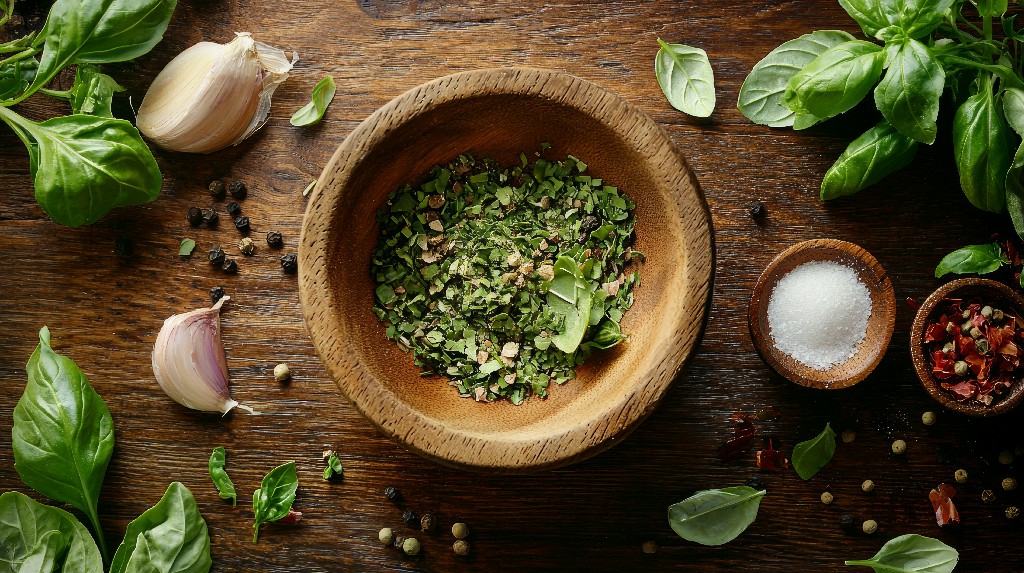
Italian herbs typically include basil, oregano, rosemary, thyme, marjoram, and sometimes sage or parsley. Basil adds sweetness, oregano provides earthiness, rosemary offers a bold aroma, and thyme brings subtle warmth.

Together, these herbs create a harmonious and versatile seasoning.


Benefits of Italian Herbs

“Italian herbs deliver natural flavor while supporting clean-label and healthier food formulations.”

Enhances Natural Flavor

Italian herbs improve taste without artificial flavor enhancers, helping food taste more authentic.

Improves Aroma and Appetite

The aromatic qualities of Mediterranean herbs stimulate the senses and enhance the eating experience.

Supports Healthy Eating

Italian herbs contain natural plant compounds that may support digestion and overall wellness.

Reduces Salt Usage

Using Italian herbs helps reduce sodium while maintaining strong flavor.


Uses of Italian Herbs

“Italian herbs are a versatile seasoning used across a wide range of culinary applications.”

Italian herbs are commonly used in pasta sauces, pizza, grilled meats, roasted vegetables, soups, marinades, dressings, and seasoning blends. Their flexibility makes them suitable for both home cooking and professional kitchens.


Italian Herbs in the Modern Food Industry

“Italian herbs play an important role in modern food manufacturing and global cuisine.”

In today’s food industry, Italian herbs are widely used in horeca, ready-to-use seasonings, and processed foods. Available in dried, ground, or blended forms, they provide consistent flavor and aroma for large-scale production.


Conclusion

“Italian herbs represent the timeless taste of Mediterranean cooking—simple, natural, and flavorful.”

With their rich history, natural benefits, and wide-ranging applications, Italian herbs remain an essential ingredient in both traditional cuisine and modern food innovation.

Rendang is one of Indonesia’s most iconic and deeply respected traditional dishes, originating from the Minangkabau ethnic group of West Sumatra. Far beyond its role as a culinary creation, rendang is a cultural symbol that reflects the values, philosophy, and way of life of the Minangkabau people. It represents patience, resilience, craftsmanship, and profound respect for tradition—values that have been passed down through generations.

Historically, rendang was not an everyday dish. It was prepared exclusively for important and meaningful occasions such as traditional ceremonies, weddings, religious celebrations, communal feasts, and events that marked significant moments in life. The preparation of rendang itself was a collective activity, often involving family members and the wider community, reinforcing social bonds and shared responsibility.

One of the most remarkable aspects of rendang is its unique cooking process. The dish is prepared through a slow and meticulous technique in which meat—traditionally beef—is simmered for many hours in rich coconut milk and a carefully balanced blend of aromatic spices. This extended cooking process allows the coconut milk to gradually reduce and caramelize, while the spices penetrate deeply into the meat fibers. As a result, the meat becomes tender, richly flavored, and naturally preserved without artificial additives or chemical preservatives.

Because of its exceptional durability, rendang played a crucial role in the traveling culture of the Minangkabau people. As they journeyed across the Indonesian archipelago for trade, education, or cultural exchange, rendang was carried as a reliable food supply that could last for weeks or even months without refrigeration. This practical function elevated rendang into a symbol of mobility, adaptability, and survival.

Over time, rendang transcended its regional roots and gained widespread recognition across Indonesia. As Indonesian cuisine reached international audiences, rendang emerged as a standout dish, celebrated for its depth of flavor, complex spice profile, and distinctive cooking method. It has consistently been ranked among the world’s best traditional foods, earning admiration from chefs, food critics, and consumers worldwide.

Today, rendang stands as a proud ambassador of Indonesia’s rich culinary heritage on the global stage. It is appreciated not only for its intense, layered flavors but also for the story it tells—a story of tradition, patience, cultural wisdom, and harmony between nature and culinary art. In an era of fast food and instant meals, rendang remains a powerful reminder of the value of time, dedication, and authenticity, making it one of Indonesia’s most treasured culinary legacies.


Indonesian Spices Behind the Authentic Rendang Flavor

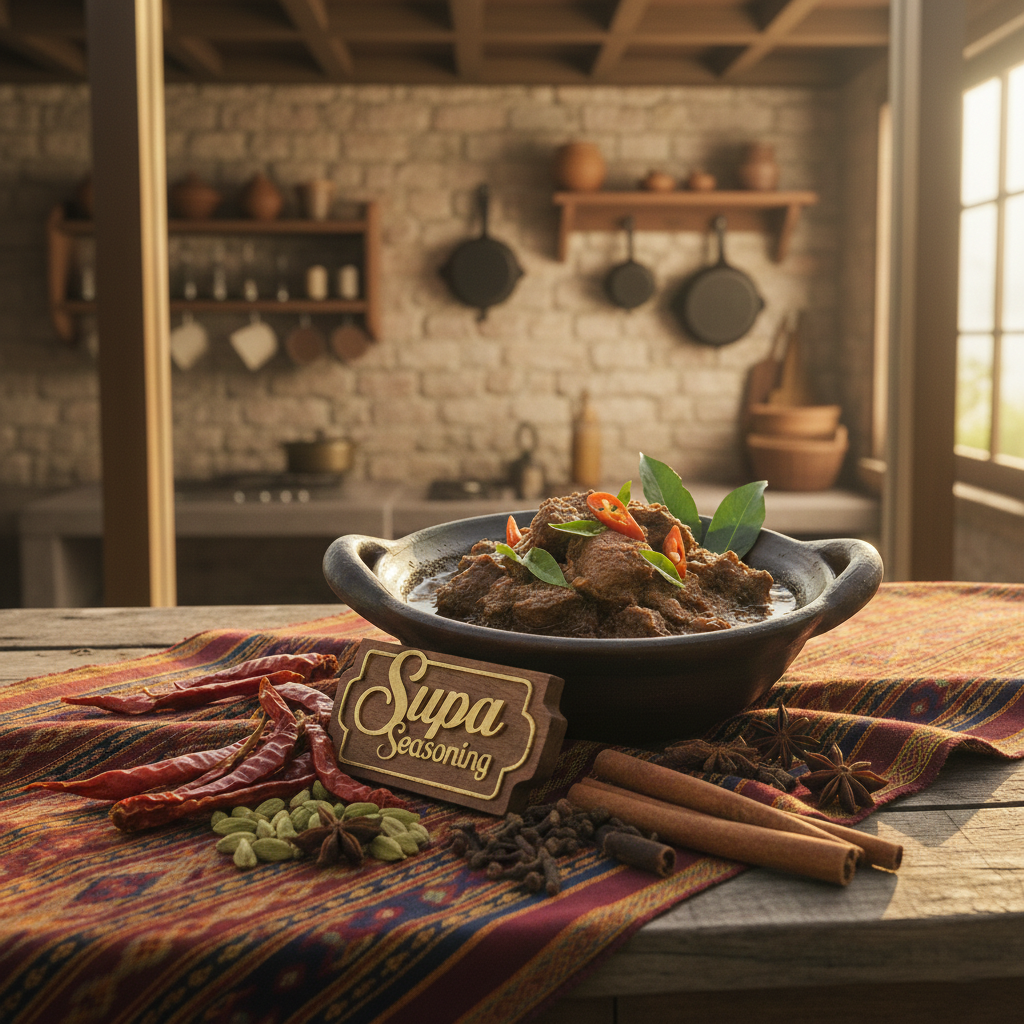
The distinctive taste of authentic rendang comes from a powerful combination of premium Indonesian spices. Each spice plays a critical role in creating rendang’s bold, rich, and long-lasting flavor profile. These spices are carefully selected, cleaned, processed, and blended to maintain their natural aroma and potency.

Key spices used in traditional and industrial rendang seasoning include:

  • Chili powder and chili paste for deep heat and intensity
  • Shallots and garlic as the aromatic base
  • Ginger and galangal for warmth and freshness
  • Turmeric for color and earthy notes
  • Lemongrass for citrusy aroma
  • Kaffir lime leaves for a distinctive fragrance
  • Coriander and cumin for depth and balance
  • Coconut-based seasoning blends for richness and preservation

When combined through proper formulation and processing, these spices create a complex flavor that remains stable and consistent, making rendang ideal for traditional cooking and modern food manufacturing applications.


Indonesia: The Source of Premium Spices for Rendang

Indonesia has long been recognized as one of the world’s leading spice-producing countries. Its tropical climate, fertile soil, and centuries-old farming traditions allow spices to grow with superior aroma, oil content, and flavor strength.

Major spice-producing regions contributing to rendang seasoning include:

  • Sumatra & Java – High-quality chili, shallots, and garlic
  • Java & Sulawesi – Ginger, turmeric, and galangal
  • Aceh & Lampung – Lemongrass and aromatic herbs
  • Sumatra & Kalimantan – Coconut derivatives and coconut-based ingredients

These regions play a vital role in supplying raw materials for both domestic consumption and international export markets, strengthening Indonesia’s position as a global spice hub.

Call Us – Your Trusted Indonesian Seasoning Partner

Bring the authentic taste of Indonesian rendang to your products with confidence. PT Supa Surya Niaga is committed to delivering premium spices, customized solutions, and reliable supply for your business growth. Contact Supa today and experience the true essence of Indonesian spices.