
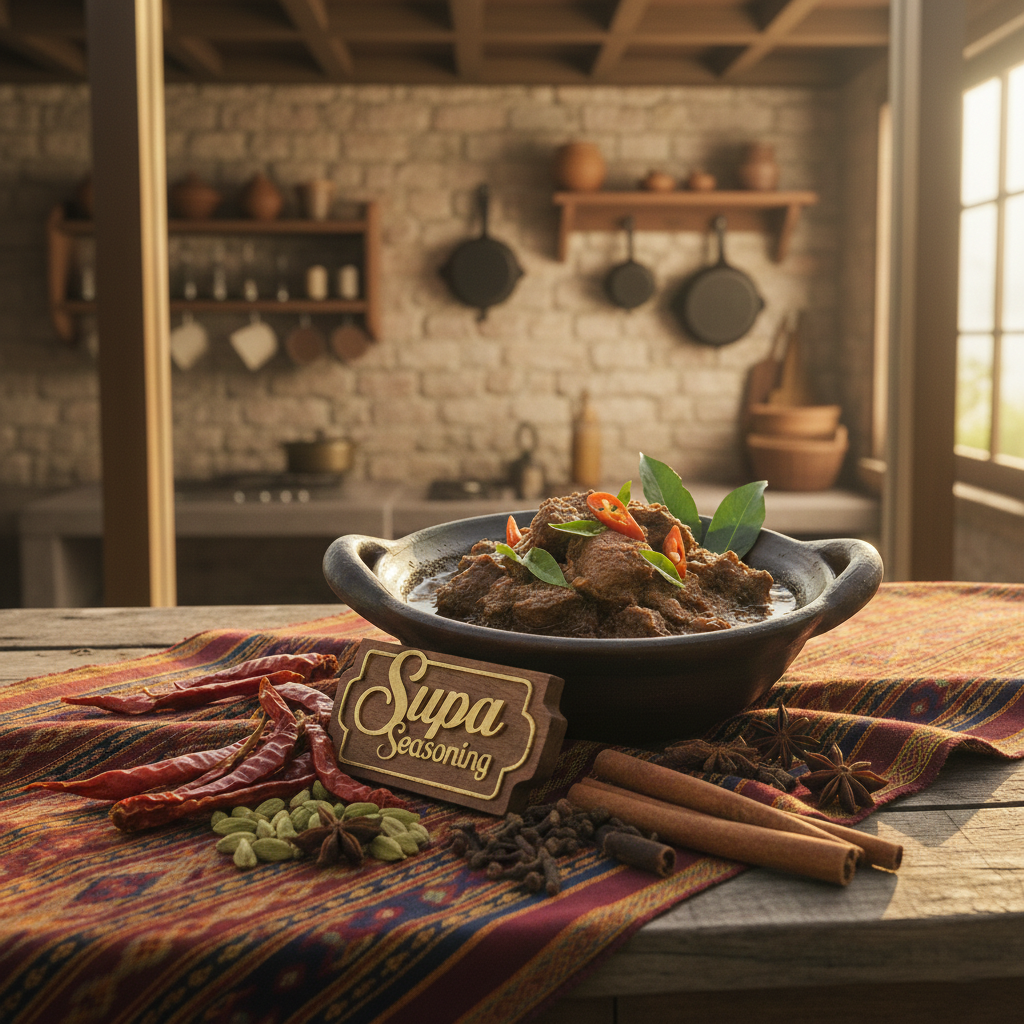
Rendang is one of Indonesia’s most iconic and respected traditional dishes, originating from the Minangkabau ethnic group of West Sumatra. Beyond its status as a culinary masterpiece, rendang is a cultural symbol that reflects the values, philosophy, and way of life of the Minangkabau people. It embodies patience, resilience, craftsmanship, and deep respect for tradition—values that have been preserved across generations.
Historically, rendang was not an everyday dish but a special preparation reserved for important occasions such as traditional ceremonies, weddings, religious celebrations, and communal gatherings. Its preparation was often a collective activity involving families and communities, strengthening social bonds and shared cultural identity.
One of the most distinctive characteristics of rendang lies in its unique cooking process. Traditionally, beef is slowly simmered for hours in rich coconut milk and a carefully balanced blend of aromatic spices. During this long cooking process, the coconut milk gradually reduces and caramelizes while the spices penetrate deeply into the meat. The result is tender meat with an intense, layered flavor and natural preservation properties, achieved without artificial additives or chemical preservatives.
Rendang’s exceptional durability made it an essential part of the Minangkabau traveling culture. As people journeyed across the Indonesian archipelago for trade, education, and cultural exchange, rendang served as a reliable food supply that could last for weeks or even months without refrigeration. This practical function transformed rendang into a symbol of adaptability, mobility, and survival.
Over time, rendang transcended its regional origins and gained national and international recognition. As Indonesian cuisine reached global audiences, rendang emerged as a standout dish celebrated for its depth of flavor, complex spice profile, and distinctive cooking technique. It has consistently been ranked among the world’s best traditional foods, earning admiration from chefs, food critics, and consumers worldwide.
Today, rendang stands as a proud ambassador of Indonesia’s culinary heritage on the global stage. It is valued not only for its rich and intense taste but also for the story it tells—a story of tradition, patience, cultural wisdom, and harmony between nature and culinary art. In an era dominated by fast and instant food, rendang remains a powerful reminder of the importance of time, dedication, and authenticity in cooking.
The authentic flavor of rendang is built on the strength of Indonesian spices. Each spice plays a crucial role in shaping rendang’s bold, rich, and long-lasting taste. These ingredients are carefully selected and processed to preserve their natural aroma and potency. Key components commonly used in traditional and industrial rendang seasoning include chili, shallots, garlic, ginger, galangal, turmeric, lemongrass, kaffir lime leaves, coriander, cumin, and coconut-based seasoning blends. When formulated correctly, these spices create a complex and stable flavor profile suitable for both traditional cooking and modern food manufacturing.
Indonesia’s position as one of the world’s leading spice producers further strengthens rendang’s authenticity. The country’s tropical climate, fertile soil, and centuries-old farming traditions produce spices with superior aroma, oil content, and flavor intensity. Regions such as Sumatra, Java, Sulawesi, Aceh, Lampung, and Kalimantan play a vital role in supplying raw materials for rendang seasoning, supporting both domestic needs and international export markets.
As a result, rendang is not only a traditional dish but also a representation of Indonesia’s rich spice heritage and global culinary influence. With its deep cultural roots and powerful flavor profile, rendang continues to inspire chefs, food industries, and consumers around the world.