
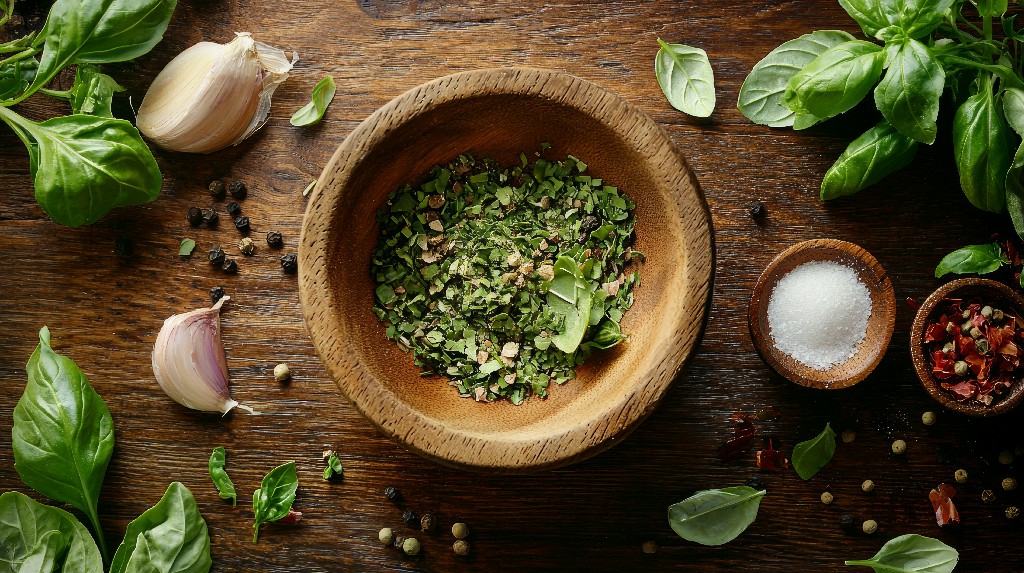
Italian herbs originate from the Mediterranean region, where aromatic plants have been used for centuries in traditional Italian cooking. In Italy, herbs were commonly grown in home gardens and used daily to flavor dishes, preserve ingredients, and support overall well-being. Thriving in warm climates, these herbs gradually became a defining element of Italian culinary identity.
Over time, the combination of Mediterranean herbs evolved into what is now known as Italian herbs—a blend that reflects simplicity, balance, and natural flavor. Today, Italian herbs are widely recognized not only in Italian cuisine but also in global cooking and modern food applications.
Italian herbs are not a single plant but a classic seasoning blend made from carefully selected aromatic herbs. This blend is designed to create a warm, savory, and balanced taste profile that enhances both simple and complex dishes. Rather than dominating the flavor, Italian herbs complement ingredients and bring harmony to food.
A traditional Italian herb blend typically includes basil, oregano, rosemary, thyme, marjoram, and sometimes sage or parsley. Basil contributes gentle sweetness, oregano adds earthy depth, rosemary provides a bold and woody aroma, and thyme brings subtle warmth. Together, these herbs form a harmonious and versatile seasoning suitable for a wide range of recipes.
One of the key advantages of Italian herbs is their natural ability to enhance flavor without artificial additives. Their aromatic qualities improve the sensory experience of food, while their plant-based compounds are traditionally valued in culinary culture. Italian herbs also help reduce reliance on salt, making them suitable for cleaner and more balanced food formulations.
In culinary use, Italian herbs are widely applied in pasta sauces, pizza, grilled meats, roasted vegetables, soups, marinades, dressings, and seasoning blends. Their flexibility makes them popular in home kitchens, restaurants, and professional foodservice environments.
In the modern food industry, Italian herbs play an important role in horeca, ready-to-use seasonings, and processed foods. Available in dried, ground, or blended forms, they provide consistent flavor and aroma for large-scale production and global markets.
In conclusion, Italian herbs represent the timeless taste of Mediterranean cooking—simple, natural, and flavorful. With their rich history, balanced flavor profile, and wide-ranging applications, Italian herbs remain an essential element in both traditional cuisine and modern culinary innovation.